
[Date: September 14, 2025]
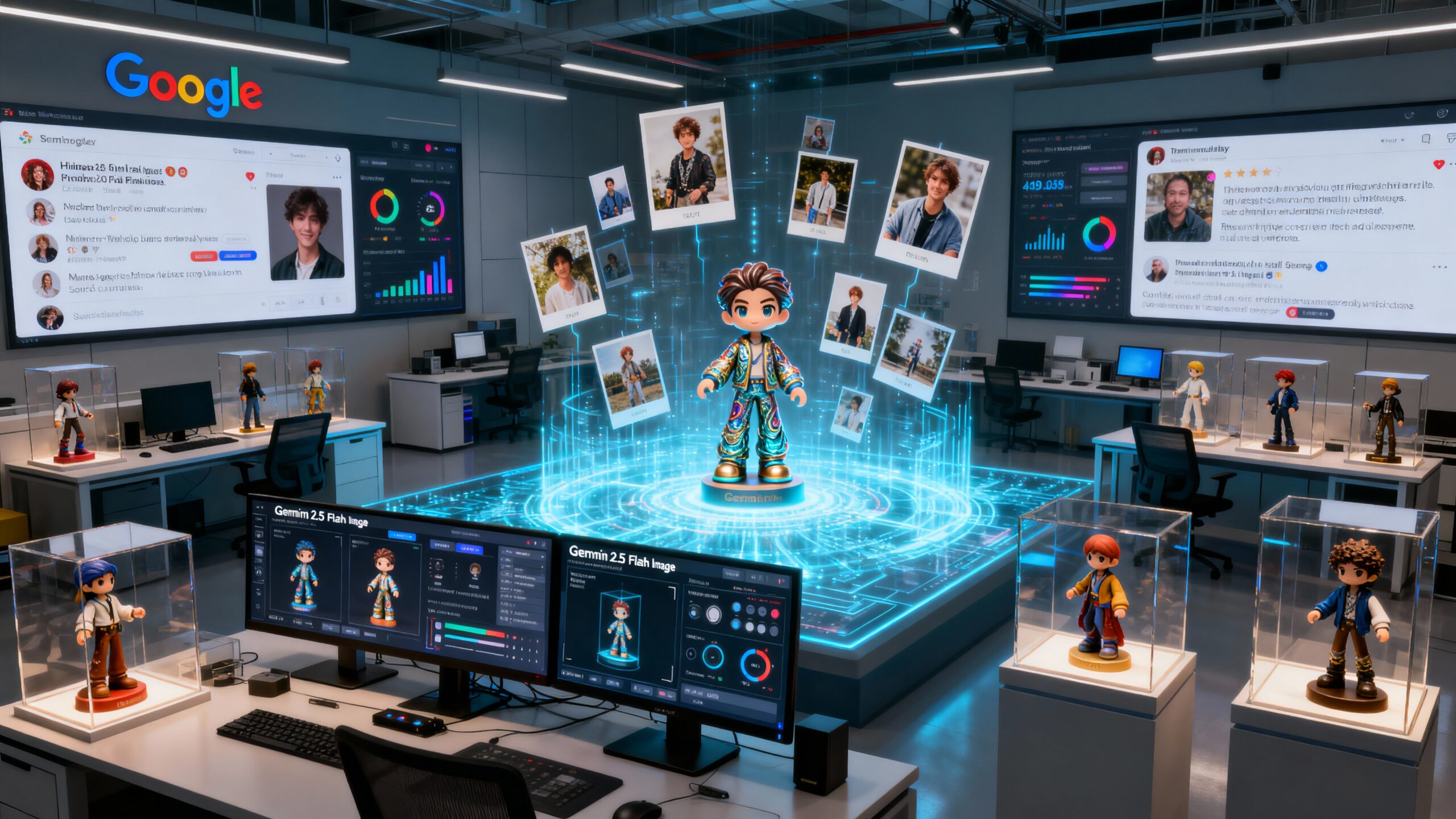
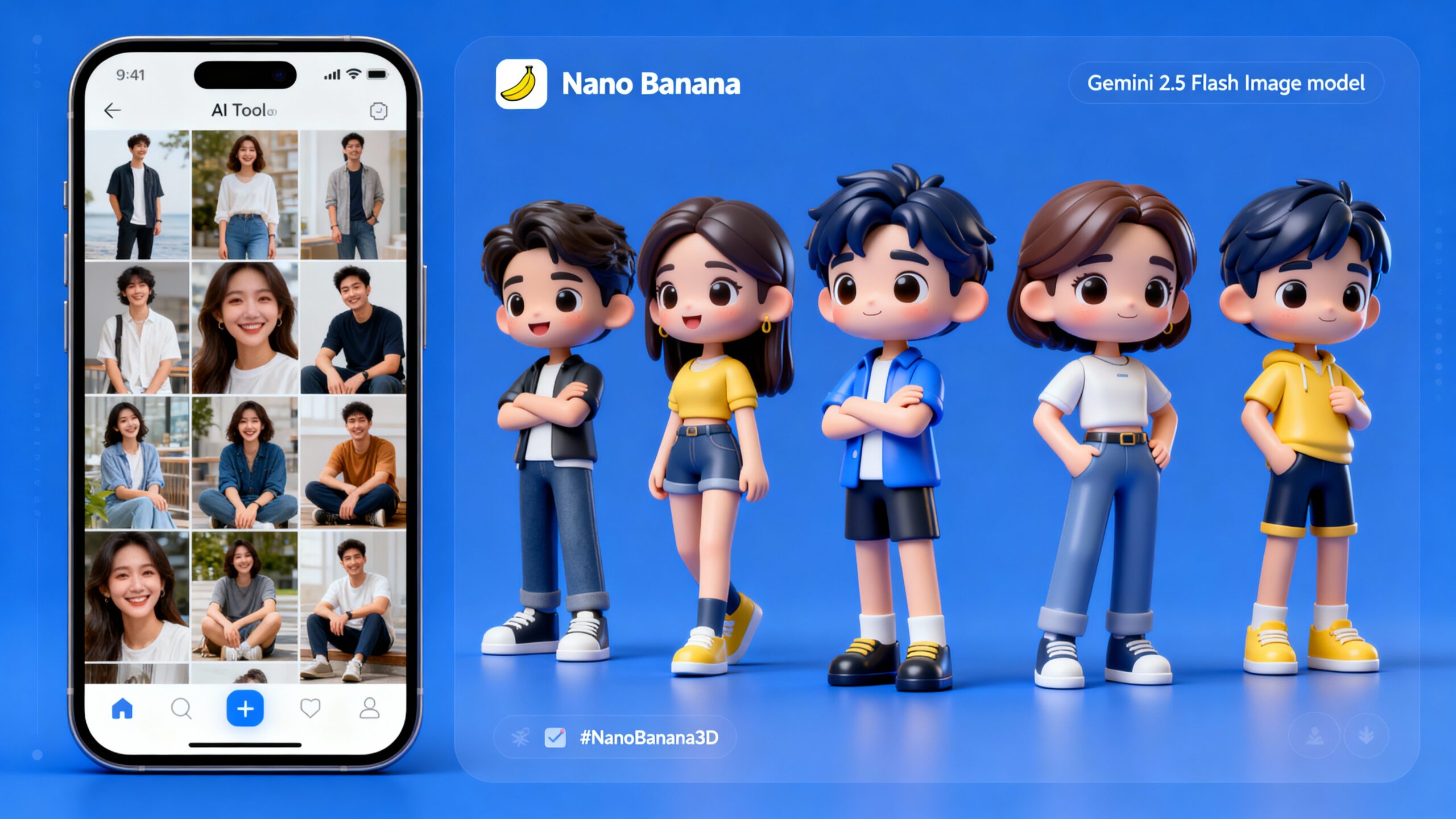
A new AI image editing tool, affectionately nicknamed “Nano Banana” by the online community, has taken social media by storm, transforming ordinary photos into stunning, hyper-realistic 3D figurines. Powered by Google’s latest model, Gemini 2.5 Flash Image, this feature has made advanced AI art accessible to everyone. Within days of its launch, the tool sparked a wave of viral trends across platforms like X, Instagram, and TikTok, proving that the next big thing in AI may just be a playful, miniature collectible that anyone can create.
Viral Popularity and Accessibility
The tool’s meteoric rise is driven by its exceptional ease of use and the high quality of its output. Unlike complex software that requires technical skills, “Nano Banana” allows users to generate a professional-looking 3D model with just a photo and a simple text prompt. The Gemini 2.5 Flash Image model is optimized for a balance of speed and photorealism, producing detailed creations with lifelike textures, natural lighting, and even custom packaging designs. This blend of simplicity and professional-grade results has turned a niche feature into a mainstream phenomenon, attracting millions of new users to the Gemini app.
Key Technical Capabilities
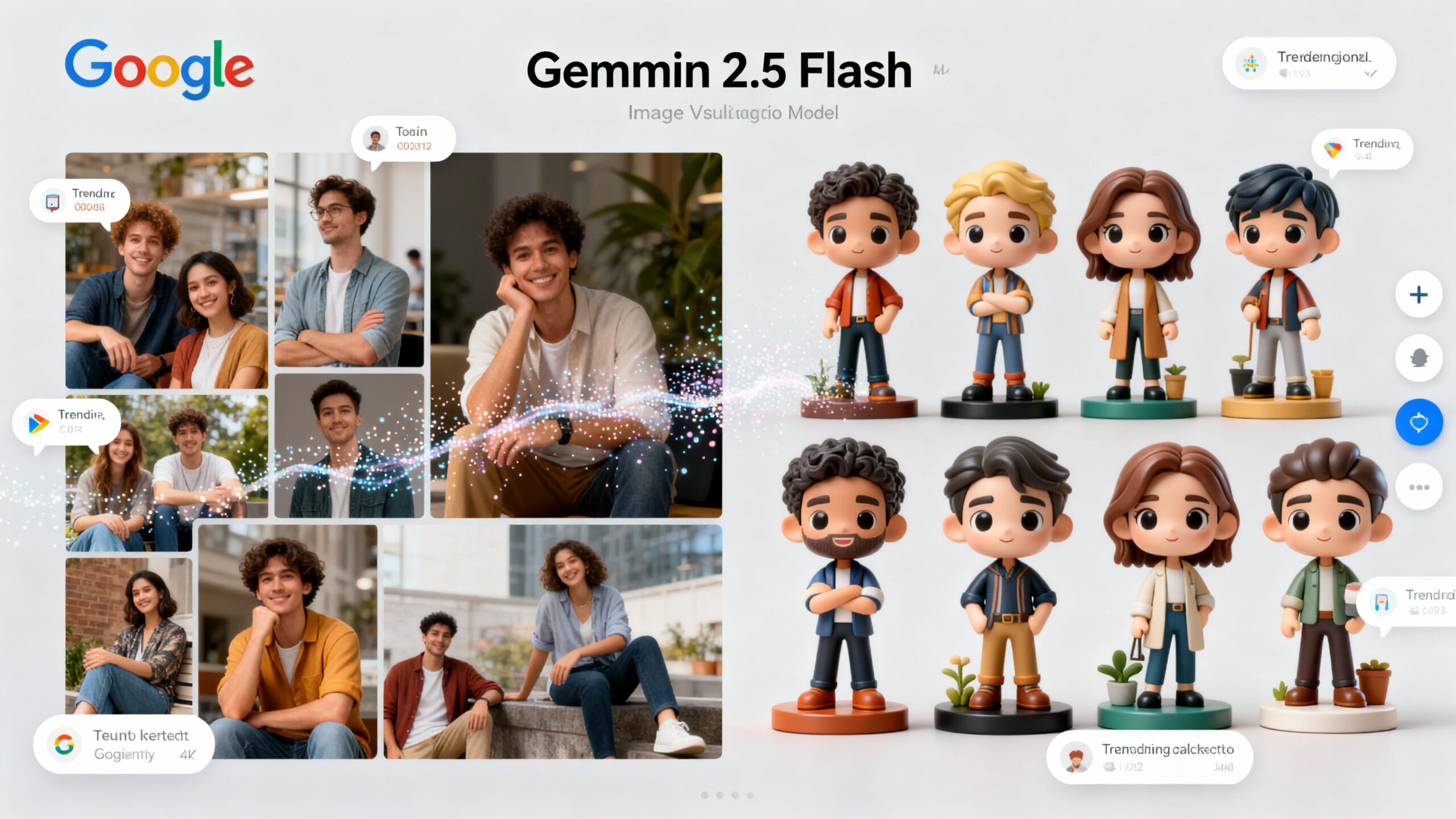
Beyond its viral appeal, the “Nano Banana” tool highlights significant advancements in generative AI technology. Its core strength is its ability to maintain character consistency across a variety of prompts and scenarios. Users can upload a photo and, with a simple text command, place the subject in an entirely new context while preserving their recognizable likeness. The underlying Gemini 2.5 Flash Image model is built for fast, multi-turn editing and blending of multiple images, which allows for sophisticated creative projects like inserting yourself into a classic painting or re-imagining a loved one as a sci-fi action figure. This capability addresses a key limitation of older generative AI models and provides a powerful new creative tool.
Competition in the AI Art Space
While “Nano Banana” is currently leading the viral trend, it operates in a competitive landscape. Other major AI platforms are also pushing the boundaries of image generation. For instance, Alibaba’s Qwen Image Edit is gaining recognition for its detail-focused approach, excelling in pixel-level accuracy and environmental realism. Meanwhile, OpenAI’s ChatGPT (GPT-5) stands out for its superior understanding of complex, multi-layered prompts, making it ideal for users who prioritize precise, instruction-based creations. The rapid innovation in this space demonstrates a clear race among tech giants to develop the fastest, most realistic, and most user-friendly generative AI tools for consumers. The popularity of the “Nano Banana” trend serves as a real-world case study for how these technologies are being adopted and a powerful indicator of what’s to come.