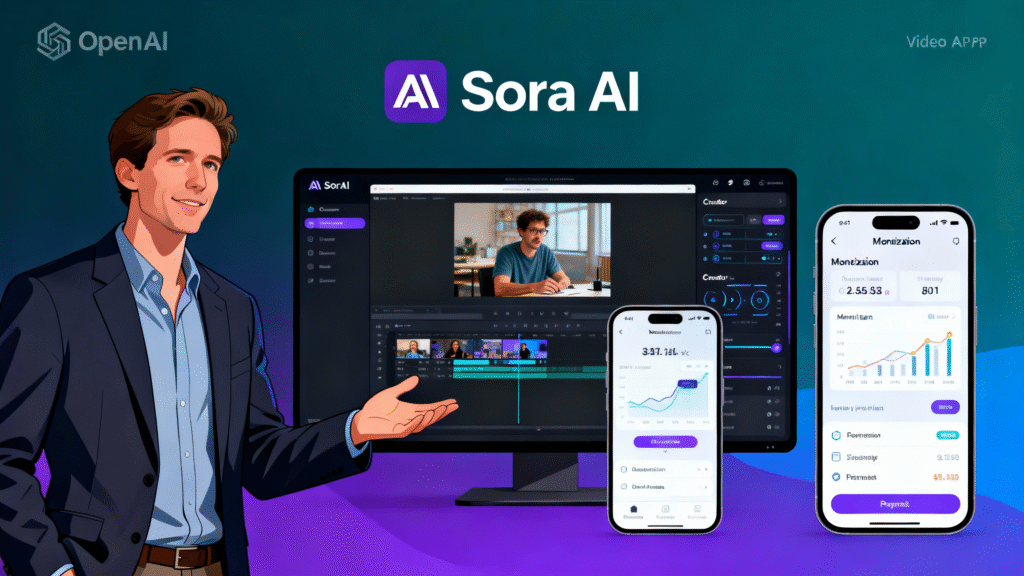

OpenAI is taking a major step to strengthen its relationship with content creators and intellectual property owners. The company has announced new features for its Sora AI video app, giving rights holders more control over how their characters and creations are used — along with a revenue-sharing program to help them earn from the platform’s growing popularity.
Sora’s New Update: Putting Creators First
OpenAI’s Sora, an AI-powered video generation app, has quickly gained attention for its ability to turn text prompts into short, high-quality video clips. However, as with many AI tools, questions around copyright, ownership, and fair use have followed its rise.
To address these concerns, OpenAI is now allowing content owners and studios to manage how their intellectual property is used within Sora. This means they can:
-
Approve or block the use of specific characters or assets.
-
Set detailed permissions for how their content appears in videos.
-
Join a new monetization program that rewards them whenever users generate content using their characters or creations.
This move represents a significant shift toward ethical AI content generation — balancing creative freedom with fair recognition for creators.
Why This Matters
The debate around AI and copyright has intensified in recent months. Many artists, film studios, and digital creators have raised concerns about their work being used to train AI models or appear in AI-generated content without credit or compensation.
By introducing monetization and control features, OpenAI aims to create a collaborative ecosystem where both creators and AI users benefit. This approach could help prevent potential legal battles while fostering innovation in the growing AI video space.
Industry experts believe this update could set a new industry standard for how AI tools handle intellectual property — paving the way for other companies to follow.
What’s Next for Sora
The company is still finalizing the details of its revenue-sharing model, including how royalties will be calculated and distributed. According to reports, OpenAI may also roll out a content rights dashboard, where creators can manage permissions, view analytics, and track monetization earnings.
While some creators may choose to limit how their work is used, others could see Sora as a new platform to reach audiences and generate additional income from AI-generated storytelling.
Balancing Innovation and Responsibility
OpenAI’s decision highlights a growing realization across the tech industry — that AI innovation must respect creative ownership. With Sora’s popularity surging, the company is positioning itself as a leader in responsible AI content creation.
As the AI video market continues to expand, OpenAI’s move could redefine how technology, creativity, and intellectual property coexist in the digital age.
Follow our AI4Planet Weekly News page and IndiaAI Mission page for more updates.