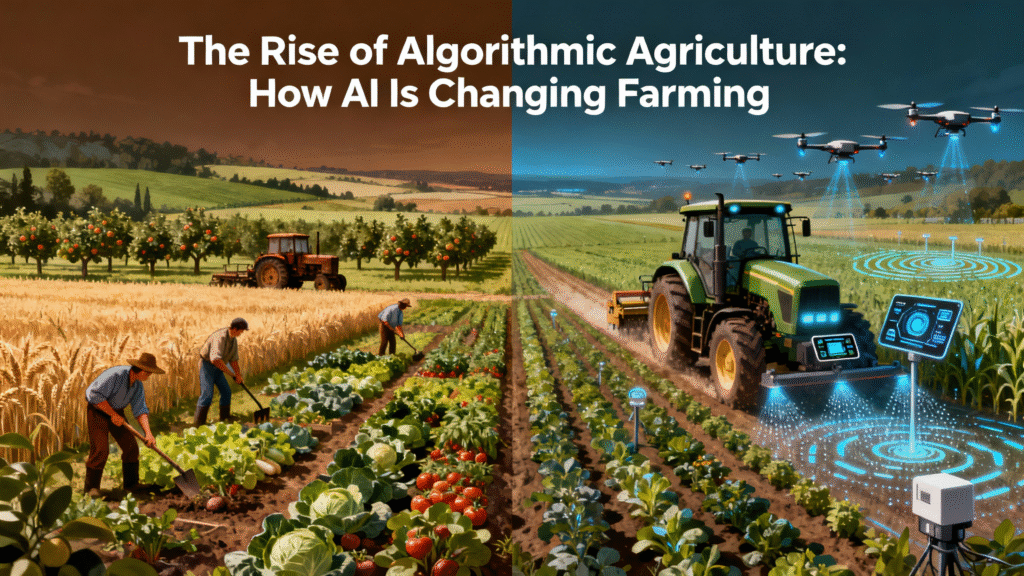

Agriculture is entering a new era. With climate change, rising food demand, and unpredictable weather, traditional farming methods are being stretched. That’s where algorithmic agriculture comes in—using AI to make seed selection smarter, crops more resilient, and food supply more secure.
From Seed to Harvest: What’s Changing
Farmers have always faced the challenge of choosing the right crop varieties. It’s not just about high yield. Success depends on many factors:
-
Local climate and seasonal changes
-
Soil type
-
Rainfall patterns and water availability
-
Resistance to disease and pests
Traditionally, seed companies ran field trials, collected data from growers, and tested varieties manually—a slow, laborious process. AI is now working alongside these traditional methods, speeding up and improving decision‐making without losing reliability.
Who’s Leading the Change
Two companies stand out in pushing algorithmic agriculture forward:
-
Syngenta Vegetable Seeds: A big name in global seed development.
-
Heritable Agriculture: A spinoff from Alphabet (Google) innovation labs, building tools to analyze agricultural data.
Together, they are creating systems that predict which vegetable seed varieties will thrive in specific places—even down to micro-levels (as precise as every 10 × 10 meters). That kind of resolution helps farmers in very different environments make better choices. AI News
Practical Tools & Use Cases
AI is already being applied in real, useful ways:
-
Predicting performance: Using trial data + location-based environmental data to forecast how well a seed will grow in a given area. AI News
-
AI-powered assistants: Platforms like Syngenta’s Cropwise use AI chatbots to help growers pick seeds, plan planting, and optimize other decisions. AI News
-
Product development: AI helps in R&D for fertilizers, biostimulants, or traits that help plants withstand drought, disease, or temperature extremes. AI News
Why It Matters: Benefits & Big Picture
Here’s what algorithmic agriculture brings:
-
Faster decisions, lower costs – Less manual trial work, faster information from AI helps optimize resources.
-
Tailored farming – Choosing seeds suited to micro-climates leads to better yields and less waste.
-
Resilience to climate change – AI can help anticipate risks and help seeds and crops adapt to changing environments.
-
Food security – More reliable output, especially in regions where farming is under strain.
Challenges & What the Future Holds
Of course, AI isn’t a magic wand. There are hurdles:
-
Data availability & quality: High-resolution, accurate data is needed for models to work.
-
Access for small farmers: Tools must be affordable and usable for farmers everywhere.
-
Adaptation across regions: What works very well in one location may still fail in another.
-
Ethical, environmental, regulatory concerns: AI tools must consider biodiversity, local ecosystems, and regulatory frameworks.
Looking ahead, we can expect:
-
Greater precision (seed variety selection on a per-field or even per-plant basis),
-
More integration of satellite, drone, soil sensor, weather-forecast data,
-
Machine learning models that continuously learn and improve as more real-world results come in,
-
Democratization of tool access so that even smallholder farmers benefit.
Conclusion
Algorithmic agriculture marks a turning point in farming. By combining AI with traditional wisdom, we’re building smarter, more resilient agriculture systems. As tools improve and become more accessible, the potential to increase yields, protect ecosystems, and support global food security grows. For those in farming—seed companies, agronomists, growers—the message is clear: adaptation with AI isn’t just useful, it’s becoming essential.
Follow our AI4Planet Weekly News page and IndiaAI Mission page for more updates.