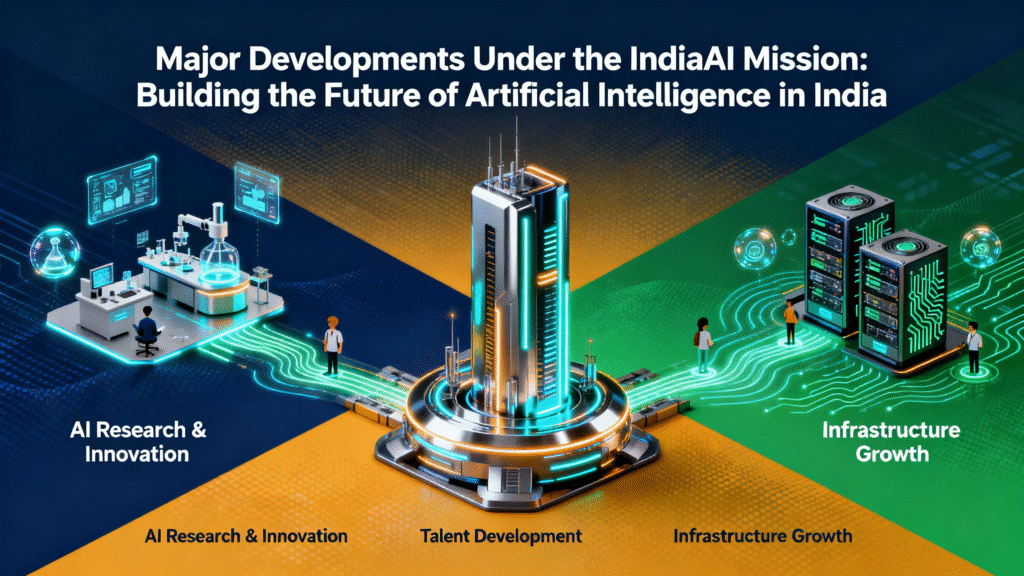

The IndiaAI Mission, approved by the Union Cabinet in March 2024 with a budget of ₹10,371.92 crore, is one of the country’s most ambitious initiatives to strengthen the artificial intelligence ecosystem. The mission aims to position India as a global leader in AI innovation, focusing on building large-scale compute infrastructure, developing indigenous AI models, supporting startups, and ensuring ethical use of technology. Over the past year, the mission has witnessed some major developments that are already shaping the future of AI in India.
The National AI Portal Of India
1. Expansion of AI Compute Infrastructure
One of the key milestones of the IndiaAI Mission is the creation of a national AI compute facility with more than 10,000 GPUs. This infrastructure is being built through public-private partnerships to provide affordable computing power to startups, research institutions, and innovators.
The government has also launched the IndiaAI Compute Portal, which offers subsidised access to GPU clusters and pre-trained AI models. This step is crucial for Indian startups and researchers who often face high costs in accessing advanced computing resources.
2. Development of Foundational and Domain-Specific AI Models
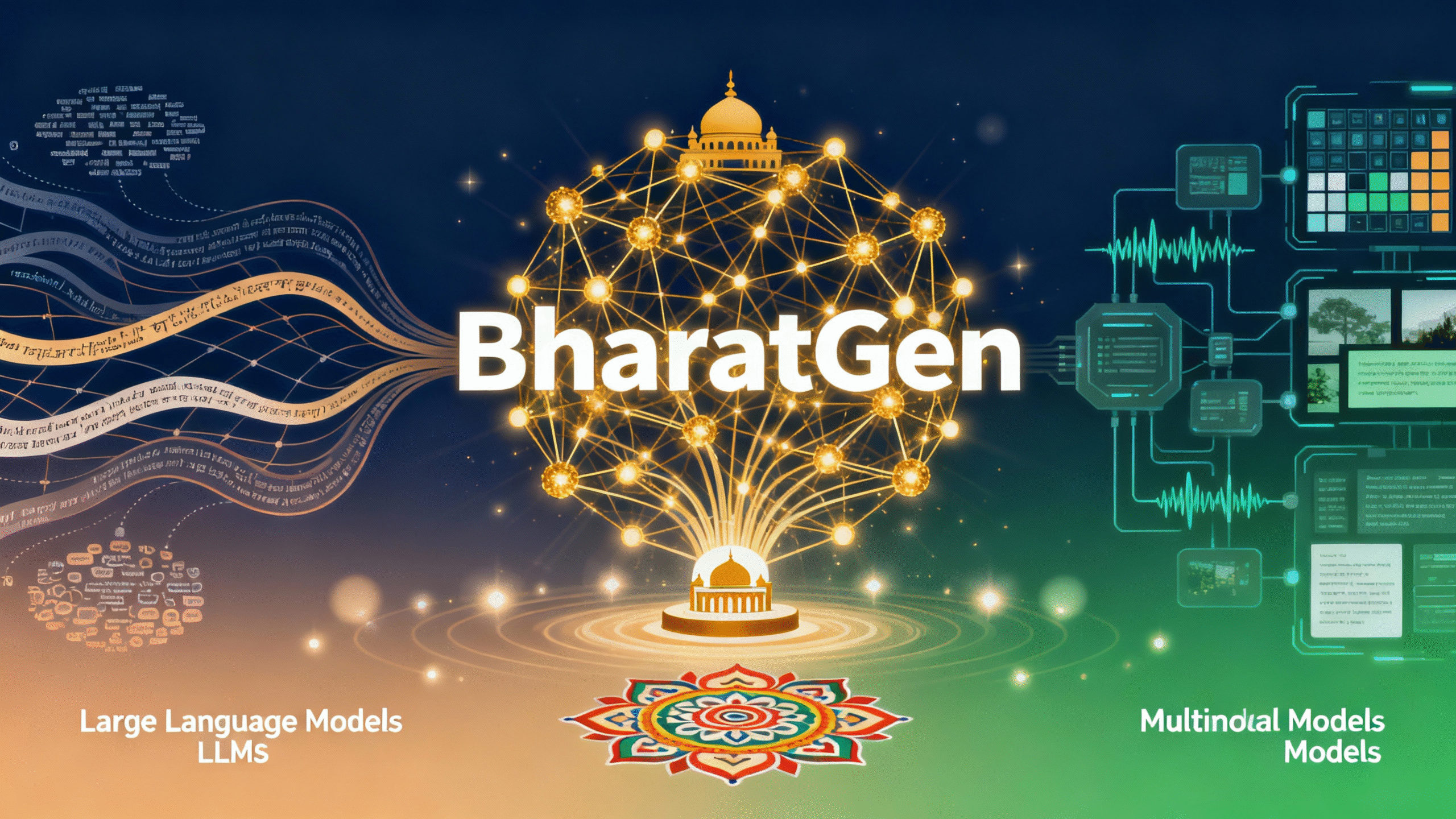
A major highlight of the mission is the push for indigenous AI models. The government has invited proposals to build large language models (LLMs), multimodal models, and small language models (SLMs) that can be fine-tuned for specific sectors like healthcare, agriculture, and education.
One such initiative is BharatGen, led by a consortium including IIT Bombay, which aims to develop multilingual AI models with parameters ranging up to 1 trillion. Recently, BharatGen received funding of nearly ₹988.6 crore, showing the scale and seriousness of India’s AI ambition.
3. Launch of IndiaAI Datasets and AIKosha Platform
Data is the backbone of AI, and the IndiaAI Mission has addressed this by launching the IndiaAI Datasets Platform to provide easy access to high-quality, non-personal datasets. Alongside, AIKosha, a secure repository of datasets and models, has been introduced to ensure researchers and startups can access reliable resources to train and test their AI applications.
4. Establishment of AI Centres of Excellence
To nurture innovation beyond metros, the mission has started setting up AI Centres of Excellence (CoEs) in key sectors such as healthcare, agriculture, sustainable cities, and education. These centres are designed to serve as hubs for research, product development, and collaboration between academia, startups, and industry.
Additionally, AI & Data Labs are being opened in Tier-2 and Tier-3 cities through collaboration with institutions like NIELIT, ensuring that AI talent and resources are spread across the country and not just concentrated in big cities.
5. Support for Startups and Skill Development
The IndiaAI Mission has introduced a strong startup financing program to provide early-stage funding support to AI-focused companies. This is helping Indian entrepreneurs take their ideas from prototype to commercial scale.
On the talent side, initiatives such as the IndiaAI Fellowship Program and the YuvAI Initiative (with AICTE) are skilling thousands of students, researchers, and young professionals. The goal is to build a pool of 13,500+ AI scholars who will become the backbone of India’s AI journey.
6. Focus on Safe and Ethical AI
Another significant development under the IndiaAI Mission is the emphasis on Safe and Trusted AI. The government is working on guidelines, frameworks, and best practices to ensure AI is used responsibly, keeping in mind issues like data privacy, bias, and ethical deployment. Special attention is also being given to ensure AI models are tailored to India’s diverse languages and cultural contexts.
Conclusion
The IndiaAI Mission is more than just a government program—it’s a roadmap for India’s digital future. From building world-class compute infrastructure to developing indigenous AI models, supporting startups, and training future talent, the mission is laying the foundation for India to emerge as a global AI powerhouse.
With initiatives like BharatGen, AIKosha, and the IndiaAI Compute Portal, India is taking concrete steps to reduce its dependency on foreign technology and build its own AI ecosystem. As these developments continue, the IndiaAI Mission is set to play a defining role in making India not just an adopter but a leader in artificial intelligence innovation.
Follow our AI4Planet Weekly News page and IndiaAI Mission page for more updates.